




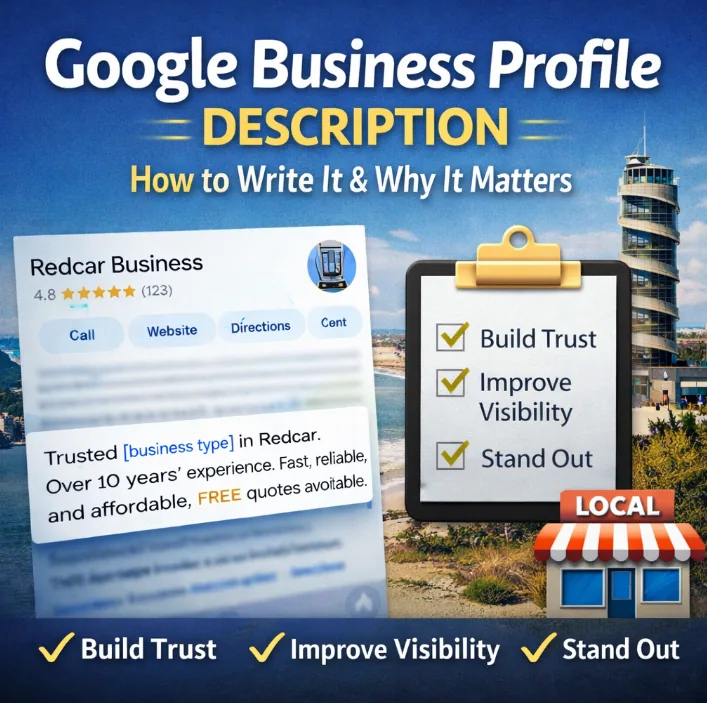
Your Google Business Profile description is one of the first things people see when they find you on Google.
Before your website.
Before they call you.
Often before they even read your reviews.
It’s a small block of text – but it carries more weight than most businesses realise.
Written well, it builds trust, sets expectations, and helps Google understand exactly what you do and where you do it.
Written poorly (or left blank), it quietly holds your visibility back.
Let’s break down how to write it properly.
What Is a Google Business Profile Description (And Why It Matters)
Your business description is a short section of text (up to 750 characters) that explains:
- who you are
- what you do
- where you operate
- why someone should choose you
It appears directly on your Google Business Profile, usually under your business name, photos, and reviews.
This isn’t the place for waffle or filler.
It’s prime real estate – and Google reads it.
While it’s not a direct ranking switch on its own, a well-written description supports:
- relevance
- clarity
- trust
- and overall local visibility
It also shapes a customer’s first impression before they ever reach your website.
What Your Business Description Should Actually Include
You’ve only got 750 characters, so every line needs to earn its place.
Here’s what both Google and real people want to see.
Clearly state what you do
This sounds obvious, but many businesses overthink it.
You don’t need fancy language. Just be clear.
Describe your core services or offerings in plain terms – the same way a customer would explain you to a friend.
Avoid vague statements like “professional solutions” or “quality services”.
Say what you actually do.
Be specific about where you work
Local SEO lives and dies on clarity.
Avoid broad phrases like:
- “UK-wide”
- “North East”
- “and surrounding areas”
Instead, mention specific towns or areas you genuinely serve – especially ones people actually recognise and search for.
This helps Google match your profile to local searches and reassures customers that you’re genuinely nearby.
Include experience (briefly)
This is not your CV.
A short line is enough:
- years of experience
- type of work you’ve specialised in
- background that builds confidence
The goal is reassurance, not autobiography.
If someone wants your full story, they’ll go to your website.
Highlight what makes you different
Most businesses describe themselves using the same tired phrases:
- reliable
- affordable
- professional
None of those help someone choose.
Your USP (unique selling point) is the reason someone picks you over the next option on Google.
That might be:
- fast turnaround
- specialist knowledge
- clear pricing
- personal service
- attention to detail
- being genuinely local
You don’t need to oversell it – just state it calmly and clearly.
Add trust signals where relevant
If your industry has certifications, accreditations, memberships, or recognised standards – mention them.
These are strong trust indicators for both customers and Google.
You don’t need to list everything you’ve ever earned.
Just the ones that genuinely matter.
This works across many industries – not just regulated ones.
Give a reason to get in touch
Your description isn’t just informational – it’s persuasive.
A simple line explaining why it’s worth contacting you helps move people from browsing to acting.
This might be:
- free quotes
- no obligation consultations
- quick response times
- clear pricing
- friendly, straightforward advice
Nothing salesy. Just helpful.
Make it clear you’re genuinely local
People trust local businesses more than faceless ones.
If you’re based in Redcar, say so.
If you’ve worked in the area for years, mention it.
This reinforces:
- local relevance for Google
- familiarity for customers
It also helps differentiate you from larger companies trying to appear local when they’re not.
A Note on Keywords (Yes, They Still Matter)
Your description should naturally reflect how people search.
That doesn’t mean stuffing keywords – it means using real language.
For example:
- “[service] in Redcar”
- “[service] near me”
- “[service] for homes / businesses”
- “[specialist service] in Redcar and nearby areas”
If it fits naturally and reflects what you actually offer, include it.
If it feels forced, leave it out.
Google is very good at understanding context – clarity beats repetition every time.
Common Mistakes to Avoid
This is where many profiles quietly sabotage themselves.
Don’t keyword-stuff
Repeating the same phrase over and over looks unnatural and untrustworthy.
Mention key services and locations once or twice – that’s enough.
Don’t make exaggerated claims
Phrases like “best in the UK” or “cheapest around” don’t build trust.
They also don’t help rankings and can sometimes cause issues with profile moderation.
Stick to what you can genuinely stand behind.
Don’t copy your website’s About page
Your GBP description should be:
- shorter
- sharper
- more direct
It’s a different platform with a different purpose.
Don’t list areas you don’t actually serve
Padding your description with dozens of locations can confuse customers and weaken trust.
If you don’t realistically cover an area, leave it out.
And definitely don’t leave it blank
An empty description is a wasted opportunity.
Even a solid first draft is better than nothing – you can always refine it later.
Your Business Description Is Your First Impression
Your Google Business Profile description isn’t a box to tick.
It’s often the first real interaction someone has with your business – when they’re already close to making a decision.
You don’t need clever copywriting or marketing fluff.
You just need to clearly show:
- what you do
- where you do it
- why you’re worth contacting
Get that right, keep it honest, and refine it over time.The more real, local, and clear your profile feels, the more both Google and customers will trust it.
